Wedding Dress Silhouettes Explained
Picture this. You walk into a bridal salon, excited and a little nervous, and within five minutes the consultant asks, “So, do you see yourself in a mermaid, or are you more of an A-line girl?”
If you nodded politely while having no idea what she meant, you are not alone. I hear this from brides all the time.
I am Tracie, a certified wedding planner here in Metro Detroit, and after 27 years of standing in bridal salons next to my brides, I can translate. Wedding dress silhouettes are simply the overall shapes a gown can take. Once you know the main ones, dress shopping gets so much easier. You can tell your consultant exactly what you want to try on, and skip what you already know is not for you.
This is the first post in my bridal terminology series, and we are starting with the shapes. Let us go silhouette by silhouette.
A-Line
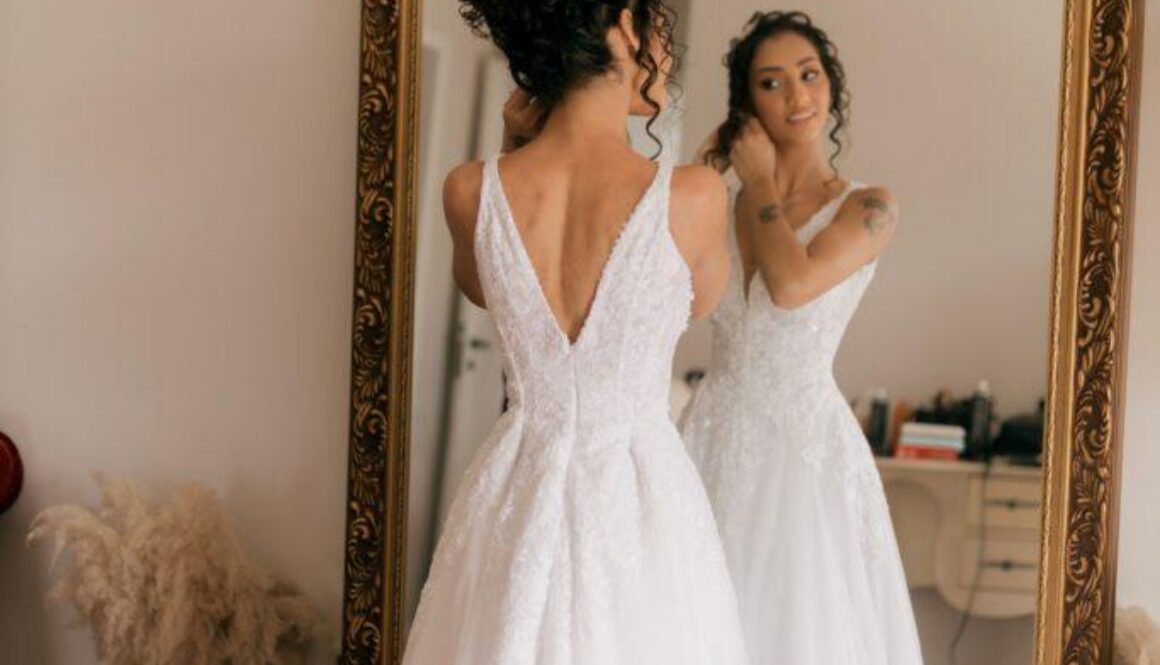
An A-line wedding dress is fitted at the bodice and through the waist, then the skirt gradually flares out toward the hem, forming the shape of the letter A.
Who it flatters: just about everyone. The defined waist shows off your middle while the skirt skims over the hips and thighs, which is why consultants call it the most universally flattering of all the wedding dress silhouettes.
Planner note: A-lines are kind to a long wedding day. They are comfortable to sit in, easy to dance in, and simple to bustle. If you are torn between two styles, start here. It is the one I suggest brides try first, even if only as a measuring stick for everything else.
Ball Gown
A ball gown is a wedding dress with a fitted bodice and a very full, dramatic skirt, usually built with layers of tulle or a crinoline underneath to hold its shape.
Who it flatters: brides who want that true princess moment. The full skirt balances a larger bust and makes the waist look small by comparison. It suits formal settings beautifully, like grand ballrooms and historic venues.
Planner note: full skirts take up real space. We plan for a little extra room at your sweetheart table and a bustle that can handle the weight. You will also want a helper for restroom trips. None of that should scare you off. We just plan for it.
Mermaid
A mermaid wedding dress is fitted closely through the bodice, waist, hips, and thighs, then flares out dramatically at or below the knee, much like a mermaid’s tail.
Who it flatters: brides who want to show off an hourglass figure and feel confident doing it. This is the most dramatic, body-conscious shape on the rack.
Planner note: movement is the trade-off. At your appointment, sit down in it, walk in it, and try a little dance. Stairs and sitting through dinner are real considerations, and good structure plus the right undergarments make all the difference in this silhouette.
Trumpet and Fit-and-Flare
A trumpet wedding dress is fitted through the bodice and hips like a mermaid, but the skirt begins to flare higher up, at about mid-thigh. Fit-and-flare is a softer, gentler version of the same idea.
So what is the difference between a mermaid and a trumpet? It is all about where the flare starts. A mermaid stays fitted all the way down to the knee before it flares, which gives it that dramatic tail. A trumpet lets go at mid-thigh, so the flare starts sooner and looks softer.
Who it flatters: brides who love the fitted look of a mermaid but want more freedom to move. It highlights your curves without hugging quite so far down the leg.
Planner note: if you try on a mermaid and think, “I love it, but I cannot move,” ask for a trumpet next. Nine times out of ten, that is the dress.
Sheath and Column
A sheath wedding dress, also called a column dress, falls straight from the neckline to the hem in a narrow shape that follows the natural line of your body, without a big flare.
Who it flatters: tall and lean brides wear this beautifully, and it is also a wonderful choice for petite brides, because there is no extra fabric to overwhelm a smaller frame.
Planner note: a sheath hides nothing, and that is not a flaw, it is the style. Fabric choice and undergarments matter a lot here. Sheaths are also the easiest gowns to transport, which makes them a favorite for destination weddings and smaller, intimate celebrations.
Empire Waist
An empire waist wedding dress has a fitted bodice that ends just below the bust, with the skirt flowing down from that high waistline instead of from your natural waist.
Who it flatters: this shape lengthens the body and puts the focus up top, while the loose skirt stays comfortable over the stomach and hips. It is a lovely option for expecting brides, and for anyone who wants to breathe easy all day.
Planner note: empire waist gowns have a soft, romantic feel that suits garden weddings, barns, and beach ceremonies. Because there is less built-in structure, talk with your consultant about support up top before you commit.
How to Choose Your Silhouette
Now that the words make sense, here is how I help my brides narrow it down.
Match the dress to the day. A ball gown in a grand ballroom and a sheath on a beach both make sense. The venue and the feeling of your wedding should guide the shape.
Try one of each. Even if you are sure you will hate a style, try one on. Dresses surprise people constantly, and you need a yes pile and a no pile to learn what you actually like.
Run the comfort tests. Sit, walk, hug, dance, and climb a step or two. You will wear this dress for ten hours, not ten minutes.
And if you would like a planner in your corner for this decision and the hundreds that follow it, I would love to meet you. Book a complimentary consultation and we will talk through your dress, your venue, and your whole day.
Want to keep learning the language? My guide to bridal gown terminology covers necklines, bodices, sleeves, and straps, so you will walk into your next appointment sounding like a pro.